Consulting
Fractional CTO for Small Business: When You Need Technical Leadership Before a Full-Time Hire
A practical guide for small businesses and founders deciding when to bring in fractional CTO support, technical consulting, architecture review, automation strategy, or software planning.
- Fractional CTO
- Technical Consulting
- Software Architecture
- Small Business
- Technology Strategy
- Systems Design
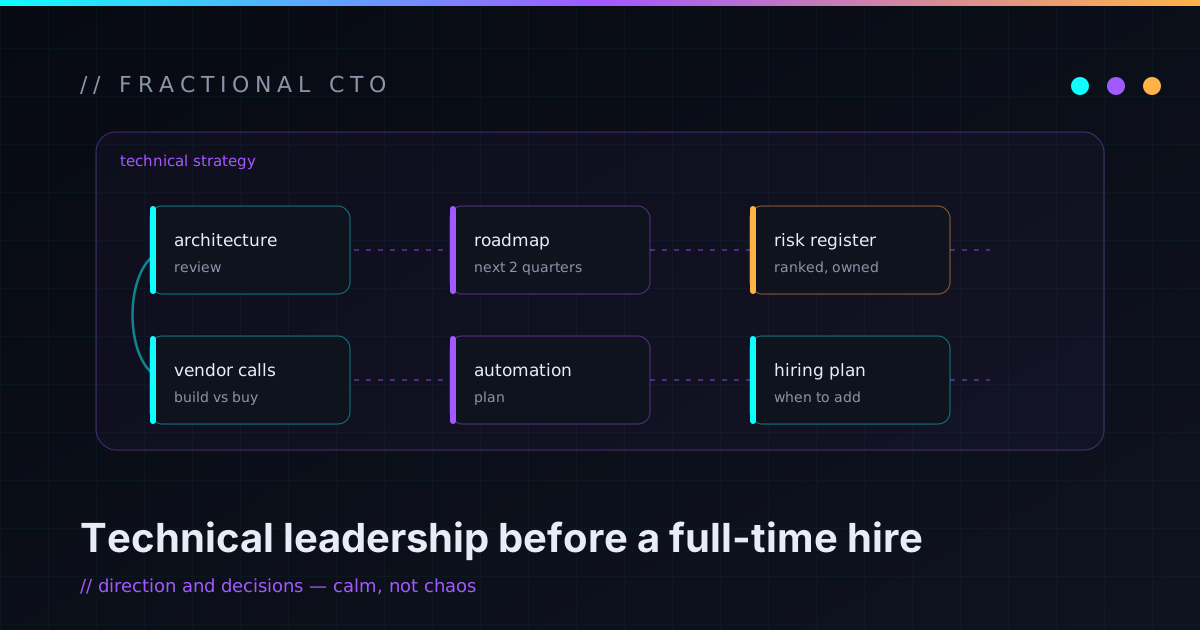
Not every small business needs a CTO. Not every founder needs an engineering team. And not every messy technical problem needs a giant roadmap, a board deck, and six months of meetings.
Sometimes you just need someone technical enough to look at the situation, understand the actual business goal, spot the expensive traps, and help you choose the next sane step.
That is where fractional CTO support — or, less grandly, practical technical consulting — earns its keep. The point isn’t to cosplay as a big company. The point is to get technical leadership before the lack of it starts costing real money. If you’re about to build software, hire developers, pick platforms, automate a workflow, migrate systems, rebuild a website, wire up APIs, or hand a business process to AI, a few good early decisions save a lot of later pain.
What a fractional CTO actually does
A fractional CTO is part-time technical leadership. For a small business or founder, that usually means helping answer questions like:
- Should we build this or buy it?
- What should the first version actually include?
- Is this vendor proposal reasonable, or are we about to get locked in?
- Is this architecture going to trap us in a year?
- What should we automate first — and what should stay manual for now?
- Is this codebase maintainable, or is one person the only thing holding it up?
- What are the real security risks, in priority order?
- What should we fix before we hire developers?
- What technical decisions matter most right now, and which ones can wait?
That can be formal or informal: a recurring advisory role, a one-time audit, a planning session before a build, a review of a vendor proposal, a sanity check before spending money. The common thread is simple — someone needs to translate between the business goal and the technical reality, in both directions.
Technology starts making decisions for you
Small businesses tend to reach a point where the tools quietly take over. The website is hard to update. The CRM doesn’t match the workflow. A spreadsheet became production infrastructure. A developer built something nobody else can maintain. A SaaS tool almost works, but not quite. An automation broke and nobody knows why. The business wants AI, but no one knows where it could safely go. One vendor says everything is custom and expensive; another says everything is easy and cheap. Both are suspicious.
Usually the problem isn’t a lack of tools — it’s too many tools, unclear ownership, weak documentation, fragile integrations, and no plan for what should happen next. Technical leadership is what turns that pile into decisions.
When you need technical leadership before a full-time hire
A full-time CTO or senior engineer is expensive, and hiring one too early is overkill. But having no technical leadership can be expensive too — it just hides the cost in rework. You likely need fractional support when:
- You’re scoping a custom software project and aren’t sure what the MVP should be.
- You’re choosing between SaaS, automation, and custom code.
- You’re hiring developers but can’t evaluate the technical plan they hand you.
- You inherited a messy website, app, or internal tool.
- Spreadsheets the business depends on are starting to break.
- You need a technical roadmap before spending real money.
- You’re connecting multiple systems with APIs.
- You want a security review, but not a full enterprise program.
- You want to use AI but need guardrails around it.
- A vendor relationship feels unclear and you want a second read.
This help is most valuable before a big project starts. Once the wrong architecture is built, every fix after it gets more expensive.
Signs your technical decisions are getting risky
Risk rarely looks dramatic. Most of the time it looks like normal operations — right up until it doesn’t. A few warning signs worth taking seriously:
- Only one person understands how a system works.
- Nobody’s quite sure where the source code lives.
- The site or app can’t be deployed safely, so changes happen straight in production.
- There’s no staging environment.
- Vendor access isn’t documented.
- API keys get shared over email or chat.
- Backups exist, but no one has ever tested a restore.
- Multiple tools disagree about customer data, and nobody knows the source of truth.
- Automations fail silently.
- Security decisions rest on “I think it’s fine.”
- Features keep getting bolted on with no plan.
None of these mean the business is doomed. They mean it’s time to slow down, map the system, and decide what actually matters before the next change lands on top of the last one.
What useful fractional CTO work looks like
“Strategy” is the wrong word for most of this. The useful version is hands-on: look at the situation, make the tradeoffs clear, design the next step, and help you dodge an expensive mistake. A few of the most common engagements:
Build vs buy
This is often the single most valuable conversation. Small businesses get stuck between two bad extremes: buy a pile of SaaS tools that almost fit and spend forever duct-taping them together, or build custom software too early and spend a fortune maintaining something a mature product already solved.
The better answer is usually more specific than either. Buy the standard parts. Automate the repetitive handoffs between them. Build custom software only where the workflow is specific enough to justify it. A good consultant weighs the SaaS options, integration paths, maintenance burden, data ownership, vendor lock-in, and migration paths — and is just as willing to say “don’t build this.” That’s usually a good sign. Technical leadership should protect you from unnecessary software, not invent more of it.
Architecture review before development
If you’re about to build, a review before code gets expensive is cheap insurance. It doesn’t need to be a giant enterprise document — it needs to cover system boundaries, the data model, user roles, deployment approach, security assumptions, integration points, logging, backups, environments, and a realistic MVP scope. The goal isn’t to predict every future requirement. It’s to avoid the obvious traps: business-critical logic living only in a spreadsheet, every user getting admin, secrets hardcoded in source, test and production data mixed together, no rollback plan. I’ve written more about why security belongs in the architecture, not bolted on at the end — the same instinct applies to the whole system.
Vendor and proposal review
Plenty of businesses hire a vendor before they know how to evaluate one. A proposal can sound polished and still leave out everything that matters: who owns the source code, where it’s hosted, what happens after launch, whether backups and updates are included, who owns the accounts, what’s custom versus template, and what happens if the vendor disappears. A technical read before you sign helps you avoid vague scope, hidden lock-in, and a system you can’t actually own. The goal isn’t to beat up vendors — it’s to make sure you understand what you’re buying.
Automation and AI planning
Automation and AI are both force multipliers, which means they multiply mistakes too. Good planning starts with the workflow, not the hype: what are we improving, what inputs does it see, what output should it produce, who reviews that output, and what happens when it’s wrong? The safest first AI workflows are human-in-the-loop — let it summarize, classify, extract, and draft, but don’t give it authority to send messages, change records, or approve payments until the workflow has earned that trust. The same logic shapes my AI automation lab, and the case for an obvious off switch on anything automated applies double once AI is in the loop.
Security review without enterprise theater
Small businesses need security; they don’t need a fifty-page report nobody reads. A practical review prioritizes the real risks first: MFA, a password manager, admin accounts, email and domain security, tested backups, vendor access, access offboarding, and how sensitive data is handled. The questions that matter are blunt — can one stolen password take over the business, can a former contractor still get in, can ransomware destroy the only copy of something important, would anyone even know what happened? Security shouldn’t start with a scary document. It should start with a prioritized fix list.
Codebase and repo audit
If you already have a website, app, or internal tool, an audit answers the real question: is this maintainable? A useful one reviews structure, dependencies, build and deploy process, secrets handling, error logging, test coverage, documentation, and developer onboarding — then says what’s working, what’s risky, what to fix first, what can wait, and whether to refactor or rebuild. The output should never just be “this code is bad.” That helps no one. The point is better decisions, not shaming the last implementation.
Infrastructure review and a technical roadmap
Sometimes the fragile part is underneath everything — the servers, networks, access patterns, and backups you only think about at 2am. And once the risks are mapped, a roadmap turns the pile of “everything is urgent” into a sequence: immediate fixes, risk reduction, the first useful automation, security basics, data cleanup, integrations, the MVP, and a maintenance plan. A good roadmap isn’t a wish list. It weighs budget, time, business impact, technical risk, and who will actually maintain the result. It’s a decision tool that answers one question: what do we do next, and why?
Good technical leadership reduces overbuilding
A lot of technical projects fail by trying to become platforms too early. Someone has an idea. The idea grows a dashboard. The dashboard needs users. Users need roles. Roles need permissions. Permissions need an admin panel. The panel needs audit logs. Then billing, onboarding, analytics, a mobile app — and somewhere in there everyone forgets what the first useful version was supposed to do. That’s how a small project becomes an expensive haunted house.
A good fractional CTO pushes back on that. The first version should answer: what problem are we solving, who needs it, what’s the smallest useful workflow, what can stay manual for now, what’s risky to automate too early, and what genuinely needs to be built correctly from the start? Not everything has to scale on day one — but the parts that matter should be designed on purpose. Knowing the difference is most of the job, and it’s the same discipline behind shipping in small, validated slices instead of one big rewrite.
What fractional CTO support is not
This kind of help works best with honest boundaries. It is not a magic replacement for an engineering team. It is not unlimited development. It is not a guarantee of startup success, a compliance certification, or a promise that every problem can be solved cheaply. It is not a substitute for hiring full-time technical staff once the business genuinely needs them. And it is not “strategy” in the vague, slide-deck sense. The useful version is concrete: review the situation, make the tradeoffs clear, design the next step, and help you avoid the costly mistakes.
A practical checklist
You may need fractional technical help if several of these are live at once:
- Should we build this or buy it?
- Is this vendor proposal reasonable?
- What should the MVP include?
- What should we automate first?
- Is our current website or app maintainable?
- Are our systems secure enough for where we are right now?
- What will break if we grow?
- Are we storing data safely, with backups we’ve actually tested?
- Are we relying on one person too much?
- Could another developer understand this later?
- What should we fix before spending more?
- What’s the simplest useful version, and what should stay manual for now?
If only one of these is nagging at you, you can probably work it out. If several are active simultaneously, technical leadership is usually cheaper than guessing.
What to gather before you reach out
You don’t need everything figured out before talking to a technical consultant — that’s part of what you’re hiring for. But a little context makes the first conversation far more useful. Helpful to collect: your current tools and systems, the main pain points, links to the website or app, any vendor proposals, screenshots of the workflows that hurt, existing documentation, known problems, the business goal, a rough budget and timeline if you have one, who uses the system, and what happens when it fails. The more context up front, the faster anyone can find the first useful slice.
FAQ
What is a fractional CTO?
A fractional CTO is part-time technical leadership for a business that needs strategic and practical technology guidance but can’t justify a full-time CTO. The role can include architecture review, vendor evaluation, technical roadmap planning, security review, automation strategy, and software project guidance.
Does a small business need a CTO?
Many small businesses don’t need a full-time CTO. They often do need technical leadership before major decisions — custom software projects, vendor contracts, automation work, website rebuilds, or security improvements — where a wrong call is expensive to undo.
What’s the difference between a fractional CTO and a developer?
A developer usually focuses on building the software. A fractional CTO or technical consultant helps decide what should be built, what shouldn’t, how the systems fit together, which risks matter, and how to create a maintainable plan. You often want both — just not always at the same time, or in that order.
When should I hire a technical consultant?
When you’re about to spend money on software, vendors, automation, infrastructure, AI tools, or a website rebuild and you aren’t confident in the tradeoffs. It’s also useful when existing systems have grown messy and hard to maintain and you need a clear read on what to fix first.
Can a fractional CTO help with AI automation?
Yes. Fractional technical support can identify safe, useful AI automation opportunities, define the human approval steps, choose the tools, protect sensitive data, and avoid overbuilding AI systems that aren’t ready for production.
Can a fractional CTO review a vendor proposal?
Yes. A technical consultant can review proposals for scope clarity, ownership, hosting, maintenance, security, documentation, lock-in, and whether the proposed solution actually matches the business need.
Clear decisions before expensive ones
Small businesses don’t need more confusing technology. They need clear decisions: what to build, what to buy, what to automate, what to fix first, what to leave alone, what’s risky, and what the first useful slice is. That’s the real value of practical technical leadership — not a title, and not a buzzword roadmap.
You don’t need a full-time CTO to make better technical decisions. Sometimes you just need someone who can walk into the messy middle, understand the systems, and help turn the chaos into a plan. If you want a sense of the kind of systems that shapes, the work page walks through real projects, and the ways I can help page lays out where this tends to start.
If you’re trying to make a technical decision before spending real money, that’s exactly the conversation I like having. I help small businesses, founders, and technical operators turn messy technology questions into practical plans — what to build, buy, automate, fix, or avoid. Reach out and we’ll find the first sane slice together.